One of the hardest parts of building Chartsy has been figuring out how to reach the right people. I do what I do best: build features. Distribution, on the other hand, has been beating me up since day one.
I have tried a lot of product directories (I even got 2 upvotes on Product Hunt).
Recently, I've also been testing paid placements. This time, I spent $299 to sponsor Stork AI Daily for a week, from 1 to 7 October 2026.
Here are the results from Stork's campaign report, alongside what I could see in Chartsy. This is an early look, written on 8 October, the day after the campaign ended.
What the sponsorship included
Chartsy appeared in seven daily newsletter issues. This is what it looked like:
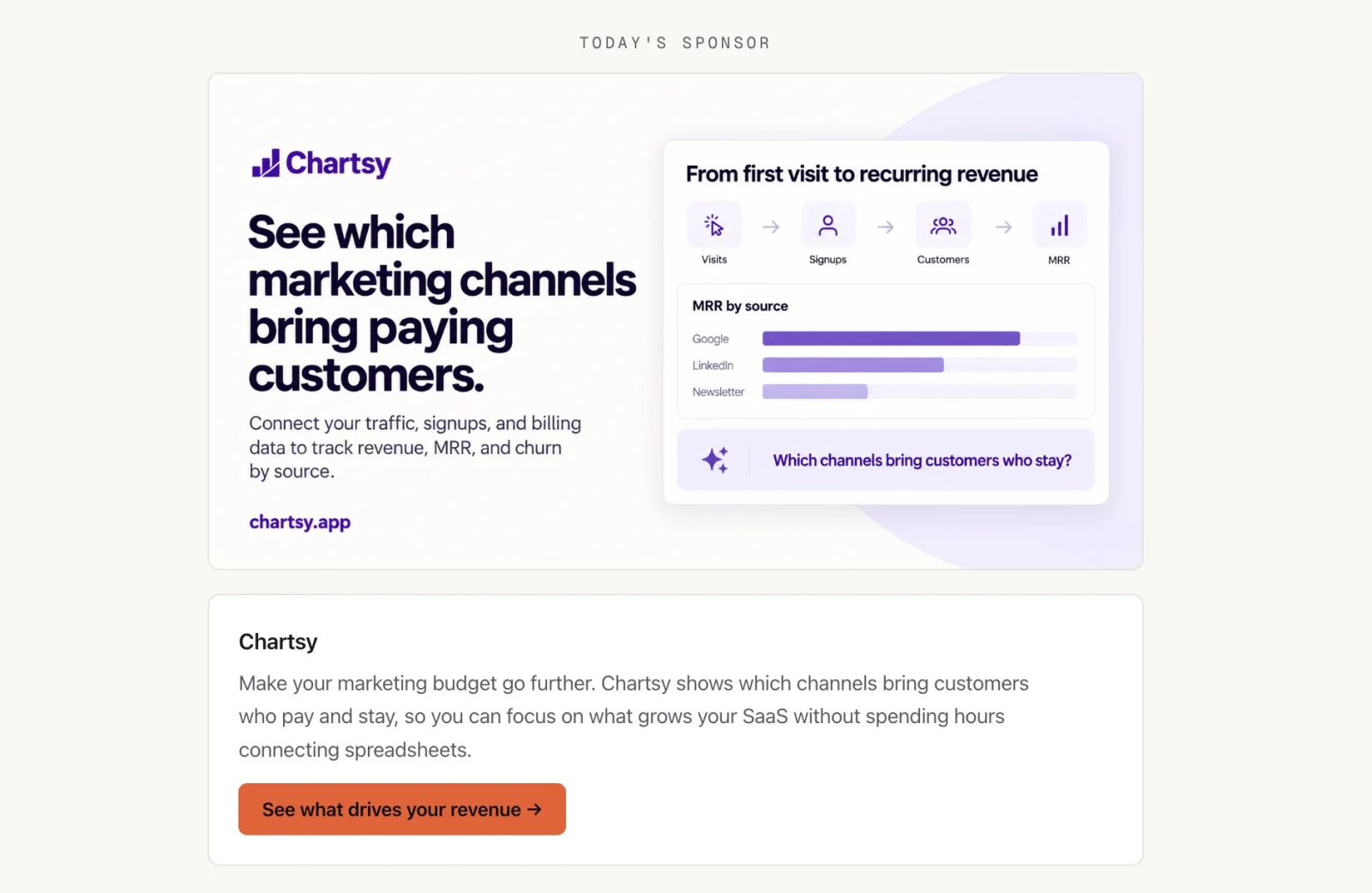
For a total of $299, that worked out to about $42.71 per issue.
Chartsy helps founders understand their subscription business and connect marketing activity to signups and revenue. It also lets people ask questions about their data and create charts or reports. An AI newsletter put it in front of people interested in tools like this, but that interest alone doesn't tell me whether they need the product.
That was what the experiment needed to help me find out.
What Stork reported
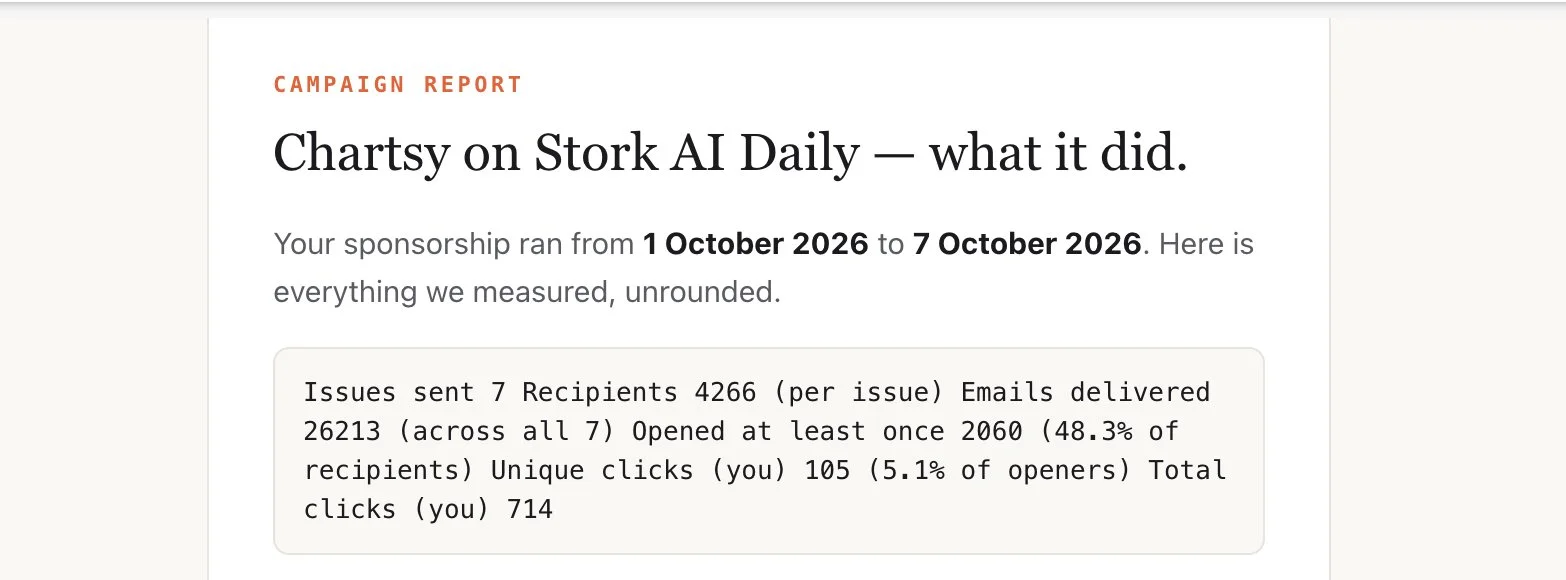 Stork's campaign report for 1–7 October 2026.
Stork reported 714 total clicks, including 105 unique clicks. Total clicks can include repeated clicks across the seven emails, so they shouldn't be read as 714 separate visitors.
I'd focus on 105 unique clicks. At $299, that's about $2.85 per reported unique click.
What I saw in Chartsy
For the same dates, Chartsy recorded 111 visits attributed to Stork, making it the largest traffic source shown in my dashboard that week.
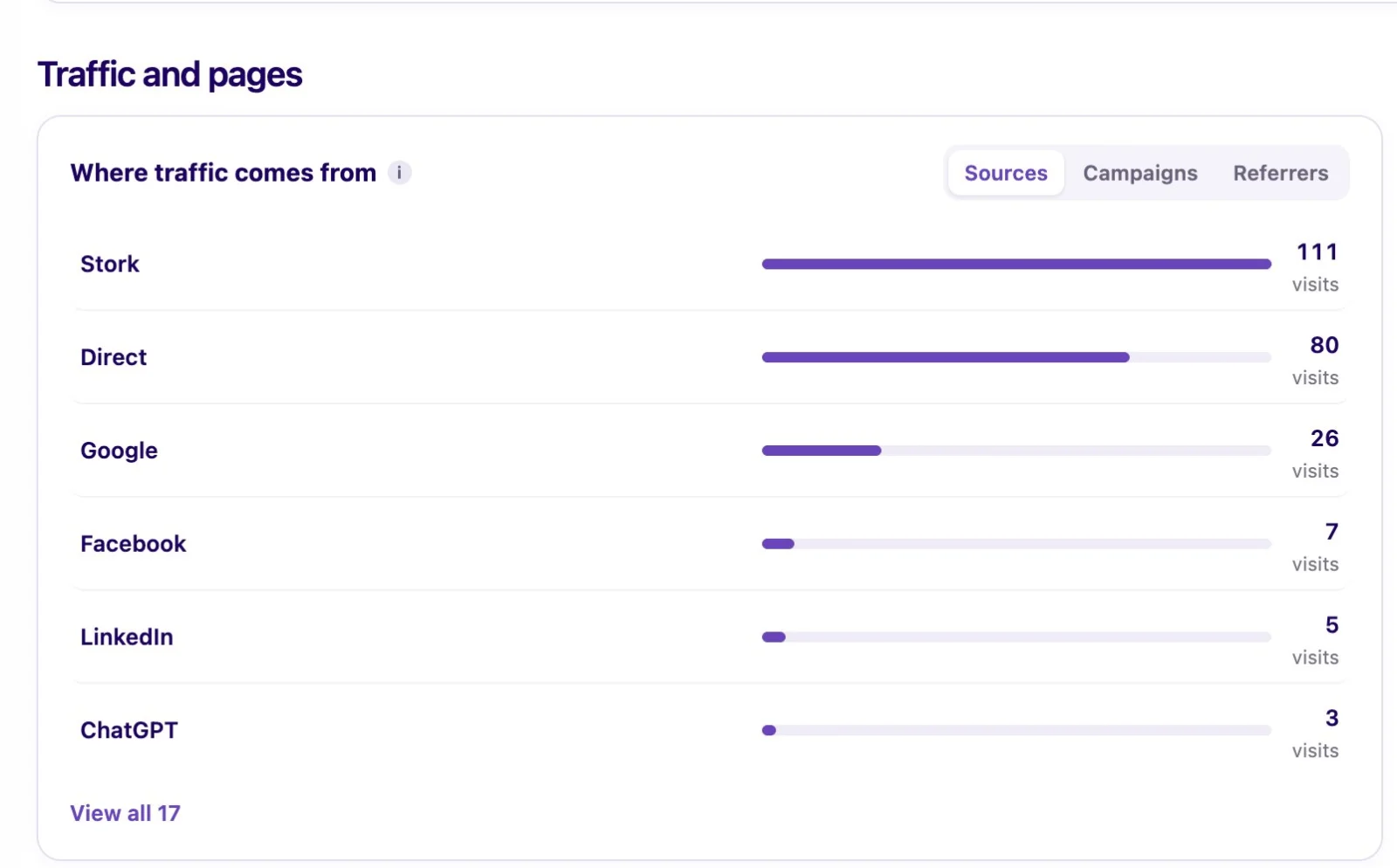 Leading traffic sources recorded in Chartsy during the campaign week.
Across all sources, there were 246 visits, so Stork accounted for about 45% of the week's tracked visits. The sponsorship cost approximately $2.69 per tracked Stork visit.
Stork's 105 unique clicks and Chartsy's 111 visits measure different things. One is a newsletter-click metric; the other is a website-visit metric. I wouldn't expect them to match exactly, or use either as a count of new customers.
Did those visits turn into customers?
Across the whole site, Chartsy recorded nine signups during the campaign dates. At the time of this review, none of those nine signups had paid.
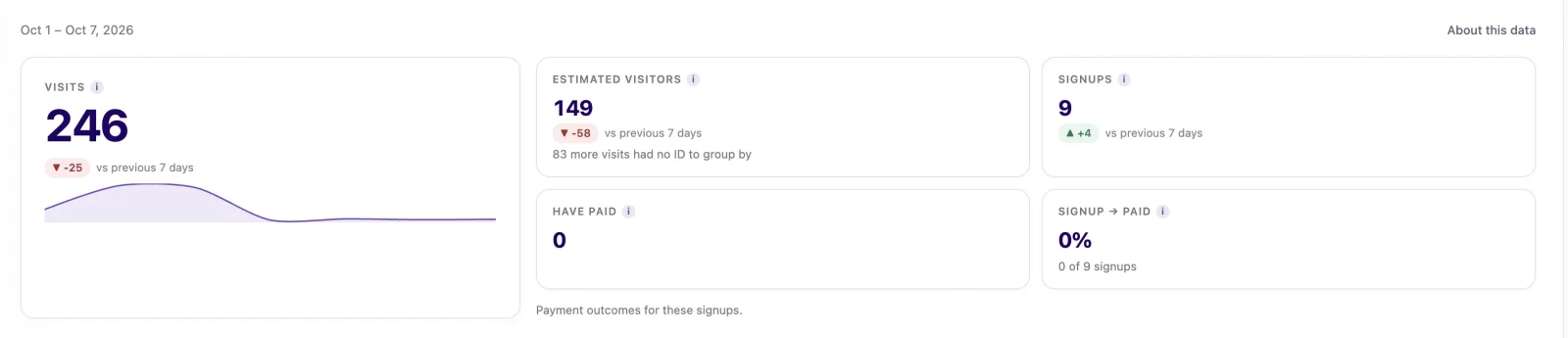 Sitewide results for 1–7 October 2026, covering all traffic sources.
Breaking those nine signups down by their first recorded source gives a clearer picture.
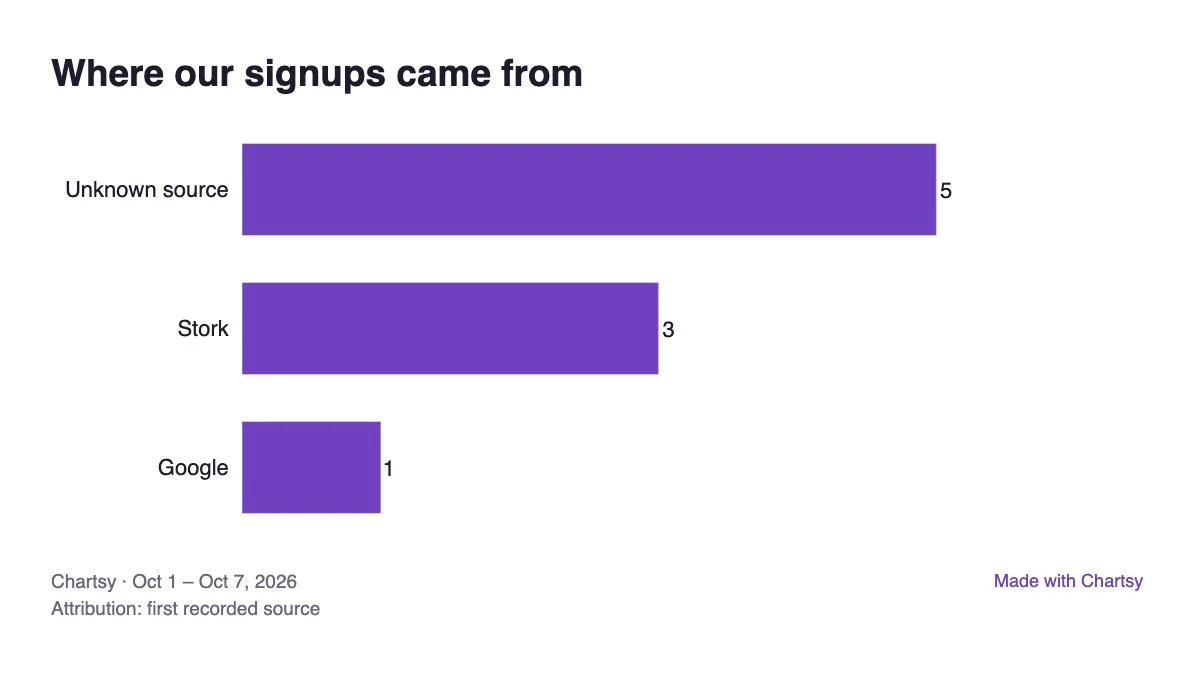 Signup attribution based on the first recorded source.
Three signups were attributed to Stork, one to Google, and five had no identified source. Based on those three attributed signups, the sponsorship cost approximately $99.67 per signup. I haven't counted the unknown-source signups as Stork results.
Also, the campaign only ended yesterday. These are the results so far, rather than a final assessment of what those visitors might do later.
Where the visits came from
For additional context, here's where the week's website visits came from across all sources.
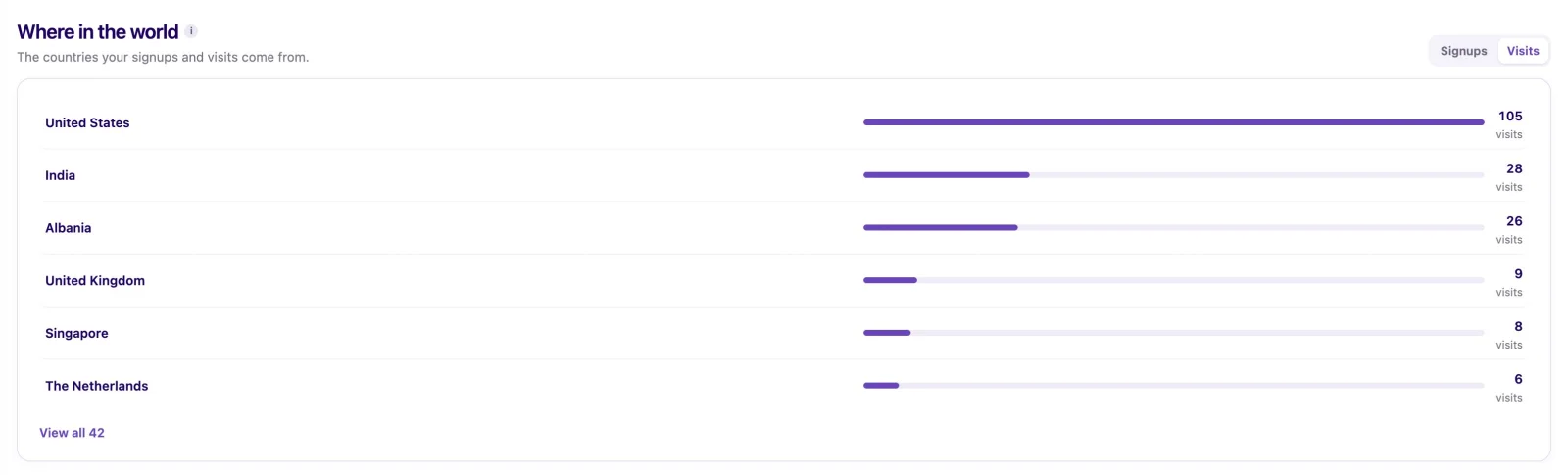 Website visits by country, 1–7 October 2026. This includes all traffic sources, not only Stork.
Is a newsletter sponsorship worth it for a SaaS?
For traffic, I have a clear result: 111 tracked visits from Stork at roughly $2.69 each.
For signups, I can attribute three to Stork, at approximately $99.67 each. None had become paying customers at the time of this review, so I don't have enough evidence yet to call it a customer acquisition success.
I want to keep following whether those signups connect their data, use Chartsy, and eventually become paying customers.
Getting someone to visit is useful, but I'm testing these channels to find people with a reporting problem Chartsy can solve.
For now, this $299 experiment made Stork my biggest tracked traffic source for the week and brought three attributed signups. Whether it becomes a channel worth repeating depends on what happens after the click.
Related reading

Written by
Serena PriftiFounder of Chartsy
Serena Prifti is the founder of Chartsy and writes about analytics, growth, and subscription metrics. She focuses on helping founders and operators turn raw data into clear insights that drive better decisions.
Serena Prifti