I paid $199 to sponsor hiPreneurs. Chartsy recorded one visit from it.
I'm pretty sure that was me checking whether the link worked. Apparently, I'm my own target audience.
I can't confirm that the visit was mine, but it does make for a very expensive link test.
I've been experimenting with different ways to get Chartsy in front of people. Product directories, newsletters, paid placements. Some experiments give me something to build on (like my $299 Stork AI sponsorship). This one mostly gave me questions about my research, my ad, and the service I paid for.
What I could actually measure
The screenshot below shows one visit attributed to www.hipreneurs.com in Chartsy. Against a $199 spend, that is $199 per recorded visit.
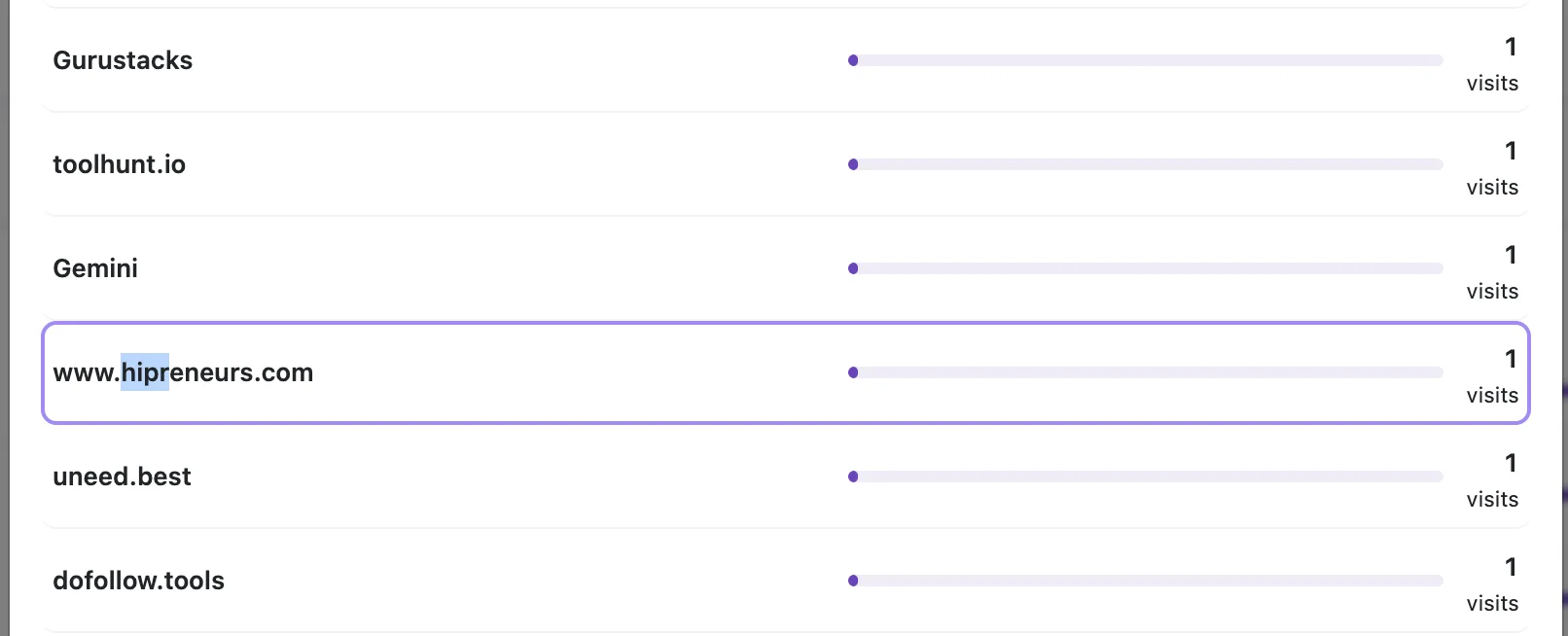 Chartsy recorded one visit attributed to www.hipreneurs.com in the dashboard view shown here.
That is what my website analytics recorded. It is not a count of everyone who saw the newsletter or an independently verified count of every click. But as a founder paying to bring people to my product, it was a disappointing result.
So what went wrong? My poor research? Their support? The placement? My very basic banner?
I think there are several things to own here, without pretending one visit tells me exactly which one caused the problem.
My banner and description needed more work
I used a very simple banner and a short description. Looking back, I don't think I gave that small piece of advertising enough thought.
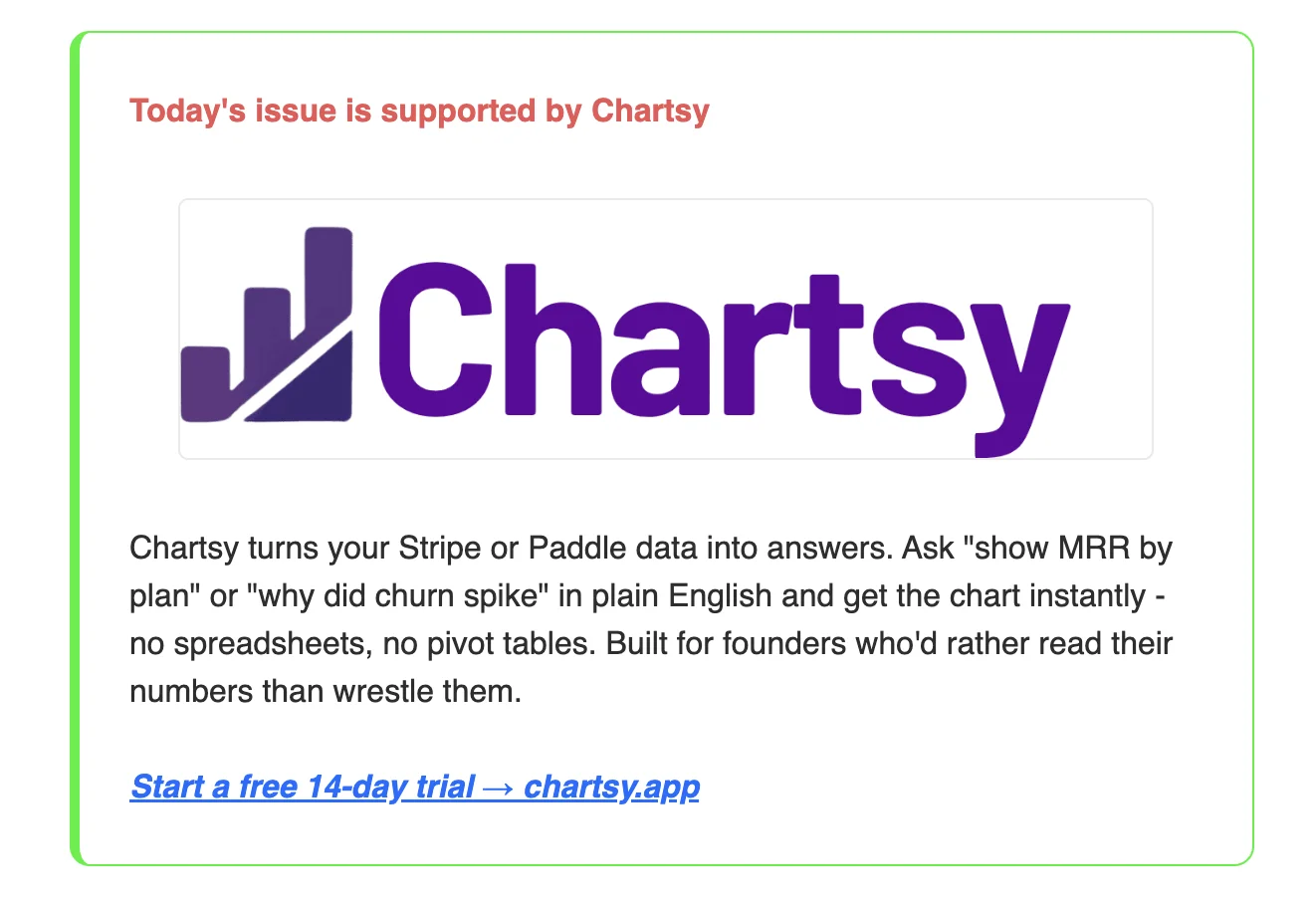 How the Chartsy placement appeared in the hiPreneurs issue.
There's nothing wrong with a simple design. But a reader who has never heard of Chartsy needs a reason to stop, understand whether it is for them, and click. I needed to make that reason much clearer.
Chartsy combines revenue and marketing analytics to help founders understand which sources bring visits, signups, and paying customers. That can mean several different things to different readers. My ad needed to pick one problem and make it feel immediately relevant.
For a future sponsorship, I'd test a message like this:
"Paying for marketing but unsure what it brings back? See which channels turn into signups and paying customers with Chartsy."
That is an example of what I would try next, not the copy I used in this placement. It gives the reader a specific question to recognise and a reason to look further.
The surrounding article felt like the wrong fit
Chartsy ended up in an issue about China and Nvidia chips, with the broader AI-news context that frustrated me in the first place.
My immediate reaction was: I'm trying to help founders understand their revenue. Why the fuck am I advertising alongside another story about China and OpenAI?
Once I got past that reaction, the more useful question was whether this was the right context for someone to care about Chartsy.
Someone reading about chip restrictions or big AI companies might also run a SaaS business. But I had not established a strong connection between that reading interest and the reporting problem I solve.
I would have preferred a placement alongside something about running a software business, understanding revenue, or deciding where to spend a marketing budget. That would at least give my message a more natural starting point.
I was disappointed with the context they placed Chartsy in. I also should have checked recent issues more carefully and clarified the likely subject and placement before paying. Those can both be true.
Paying for a sponsorship doesn't automatically buy control over the editorial topic. I needed to make sure what I expected matched what I was buying.
The support did not improve the experience
When I asked for support, I didn't find it very helpful. That added to the frustration of a campaign that had already delivered very little measurable traffic for me.
I don't expect a publisher to guarantee customers. But I do expect helpful communication when I have questions about a placement I've paid for.
The support experience is a separate issue from whether my banner was good enough. I can take responsibility for my creative and still be disappointed with the service I received.
So who gets the blame
My research and creative are my responsibility. I could have been more selective about the audience and context, and more deliberate about what I asked the reader to do.
The provider is responsible for the service they sell and the support they give. Based on my experience, I was not happy with either the placement context or the help I received when I asked for it.
What I can't do is use one recorded visit to prove that a better banner would have worked, or that the article topic was the only reason it didn't. I changed none of those things in a controlled test.
What I can say is that I paid $199, recorded one visit, and came away disappointed with the experience. That is enough for me to change how I choose the next sponsorship.
What I would do differently before paying again
- Read several recent issues. I want to understand what readers regularly come for, beyond the audience description on the advertising page.
- Ask where the ad will appear. I'd want an example of the placement and clarity about whether the topic is known in advance, whether I can review a preview, and what I'm actually buying.
- Make the ad about one problem. One clear benefit, a specific reason to click, and a landing page that follows through on that promise.
- Agree on reporting and support upfront. What results will they share, when will they share them, and who can help if I have a question?
- Track my own results. Publisher reports and my website analytics answer different questions. I want to see what reaches Chartsy and what happens after that. A tagged link with UTM parameters for each placement makes that much easier.
Was it worth it
Based on what I recorded and the service I experienced, no. I wouldn't repeat the same purchase with the same creative and expectations.
I'll keep experimenting with distribution, but I want each test to begin with a clearer reason why this audience, this placement, and this message belong together.
And next time, I'd like at least one visitor who isn't potentially me.
Related reading

Written by
Serena PriftiFounder of Chartsy
Serena Prifti is the founder of Chartsy and writes about analytics, growth, and subscription metrics. She focuses on helping founders and operators turn raw data into clear insights that drive better decisions.
Serena Prifti