
A solo founder opens the dashboard on Monday and sees MRR dip. The hard part is not noticing the drop, it's figuring out whether the problem is churn, downgrades, failed payments, or a channel that stopped bringing in paying customers. With lemon squeezy alternatives, the billing platform itself shapes how quickly you can answer that question, because the subscription data lives in different places depending on who handles tax, who owns the transaction, and how cleanly the events can be reported. For SaaS teams, that makes this choice a reporting decision as much as a checkout decision.
This list keeps the focus on SaaS. It groups tools by billing model, merchant of record platforms, gateway-based subscription tools, and creator storefronts, then looks at the practical trade-offs that matter when you care about MRR, churn, and which marketing sources bring paying customers. It also shows where Chartsy fits, since Chartsy reads Stripe, Paddle Billing, Paddle Classic, and Freemius natively, with read-only connections for Stripe and Paddle, and uses the Custom API for other providers, meaning you send the data yourself rather than getting an automatic connection. If you want the metric side of this topic, the key SaaS metrics to track are the right companion to this buying decision.
Table of Contents
- 1. Paddle
- 2. Stripe Billing Plus Stripe Tax
- 3. Chargebee
- 4. FastSpring
- 5. PayPro Global
- 6. Verifone and 2Checkout
- 7. Freemius
- 8. Gumroad
- 9. Payhip
- 10. SendOwl
- Top 10 Lemon Squeezy Alternatives, Quick Comparison
- Choosing by Persona and Taking the Next Step
1. Paddle
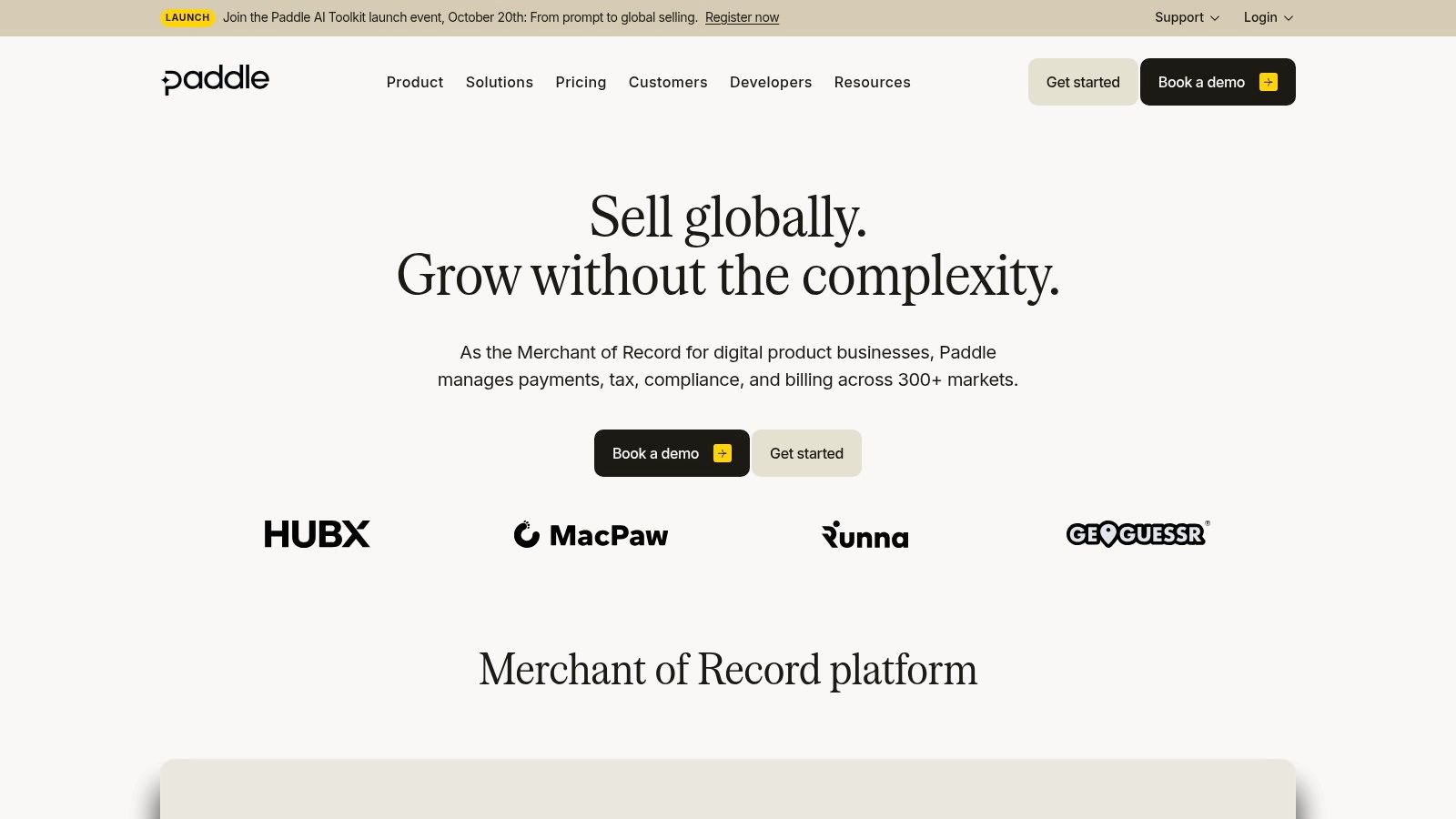
Paddle is the cleanest choice when you want a merchant of record that's built for SaaS instead of adapted to it. It handles checkout, global payments, tax and VAT compliance, subscriptions, and localized pricing, so you're not piecing together separate systems just to sell a recurring product. Its history matters too, Paddle was founded in London in 2012 and has had more than a decade to build the software-billing side of the business Paddle company background.
When Paddle fits
Paddle makes sense when you want to sell across borders without managing tax registrations and filings yourself. It supports flat, tiered, per-seat, and usage-based pricing, which is useful if your SaaS has moved beyond a single monthly plan. The other big draw is that it keeps the operational burden off your team, while giving you subscription workflows that feel designed for software.
Practical rule: choose Paddle when compliance work is starting to distract from product and growth work.
The trade-off is control. As a merchant of record, Paddle owns more of the transaction relationship than a pure processor does, so you give up some direct control in exchange for less tax and compliance overhead. That's usually fine for founders who care more about shipping and reporting than about owning every payment edge case. For Chartsy users, Paddle is also straightforward because Chartsy connects to Paddle Billing and Paddle Classic natively through Paddle analytics in Chartsy.
2. Stripe Billing Plus Stripe Tax
A founder who wants control usually ends up here. Stripe keeps you as the seller of record, so you decide how the billing stack is wired, while tax registrations, filings, and related responsibility stay on your side. Stripe Billing covers subscriptions, invoicing, metered and usage pricing, proration, trials, and customer-portal flows. Stripe Tax handles automated calculation and threshold monitoring Stripe.

Why founders keep choosing Stripe
Stripe fits teams that need fine-grained billing logic and direct access to transaction data. Usage-based SaaS, proration tied to contract terms, and revenue analysis all work better when you can control the flow yourself. The ecosystem is huge, the developer experience is familiar, and if you want to automate the reporting side, the Yalc Stripe workflow pairs well with a read-only analytics connection. Chartsy connects to Stripe natively, so you can analyze revenue without changing anything in Stripe.
The trade-off is responsibility. Stripe is not a merchant of record, so the tax and compliance work stays with you. You still need a plan for filings, support around billing edge cases, and the operational overhead that comes with owning the processor relationship. For founders comparing lemon squeezy alternatives, the question is whether they want Stripe's control or a platform that takes on more of the admin.
3. Chargebee
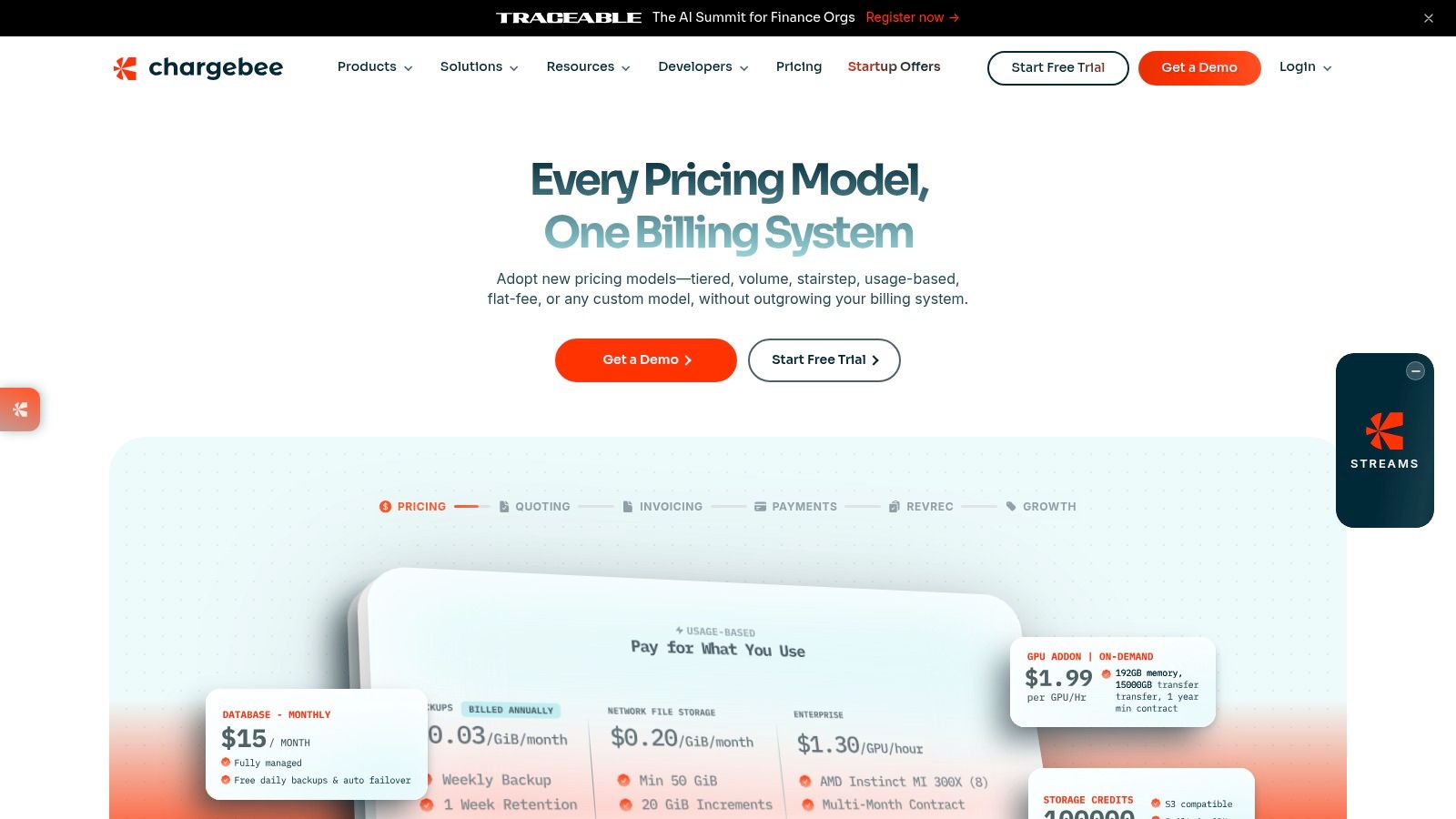
Chargebee sits in the subscription-management layer. It doesn't replace your payment processor, and it isn't a merchant of record, but it gives SaaS teams a deeper billing system for pricing rules, dunning, invoicing, revenue recognition, and RevOps work. It's the kind of tool you pick when your billing model has become more complex than a simple checkout and a monthly invoice Chargebee.
Best use cases and limits
Chargebee is a good fit for teams that already have a processor like Stripe and want more structure around packaging, quoting, invoicing, and recurring billing logic. Its support for tiered, volume, and usage-based pricing is useful when different plans need different billing mechanics. If your sales process includes quotes, CRM handoff, or more formal customer-account workflows, Chargebee can be a real upgrade.
That said, tax and filing obligations still stay with you. It's not a merchant of record, so the compliance side doesn't go away. Pricing can also be more involved than lightweight creator tools, which is why it tends to fit teams that have outgrown “simple checkout” thinking. For analytics, Chartsy can help if your billing records are normalized well, but the cleanest native paths are still Stripe, Paddle Billing, Paddle Classic, and Freemius. For teams using other billing setups, the billing events need to come through Chartsy's subscription analytics for custom billing workflow.
4. FastSpring
FastSpring is a merchant of record platform for software teams that want tax, VAT, and compliance handled across many countries. It bundles payments, subscriptions, invoicing, localized checkout, and international coverage into one system, which is useful if your SaaS sells widely and you don't want to maintain your own registrations everywhere. It's a strong choice for teams that want MoR simplicity without treating billing as a side project FastSpring.

Where it earns its place
FastSpring is strongest when international selling is routine, not occasional. A SaaS founder selling into multiple markets can use it to reduce compliance overhead and avoid stitching together tax tools around a processor. It's also attractive when the team wants a long-standing, enterprise-leaning MoR provider instead of a newer entrant.
The trade-off is that pricing is typically quote-based and less transparent online, so you usually need a sales conversation before you know the cost. That's fine if you value coverage and support more than instant self-serve simplicity. For reporting, the useful question isn't just whether FastSpring can bill globally, it's whether your downstream analytics stack can still tell you where MRR came from. If you use FastSpring, plan your reporting pipeline carefully, because Chartsy won't connect to it natively. You'd need to send the normalized billing data through the Custom API.
5. PayPro Global
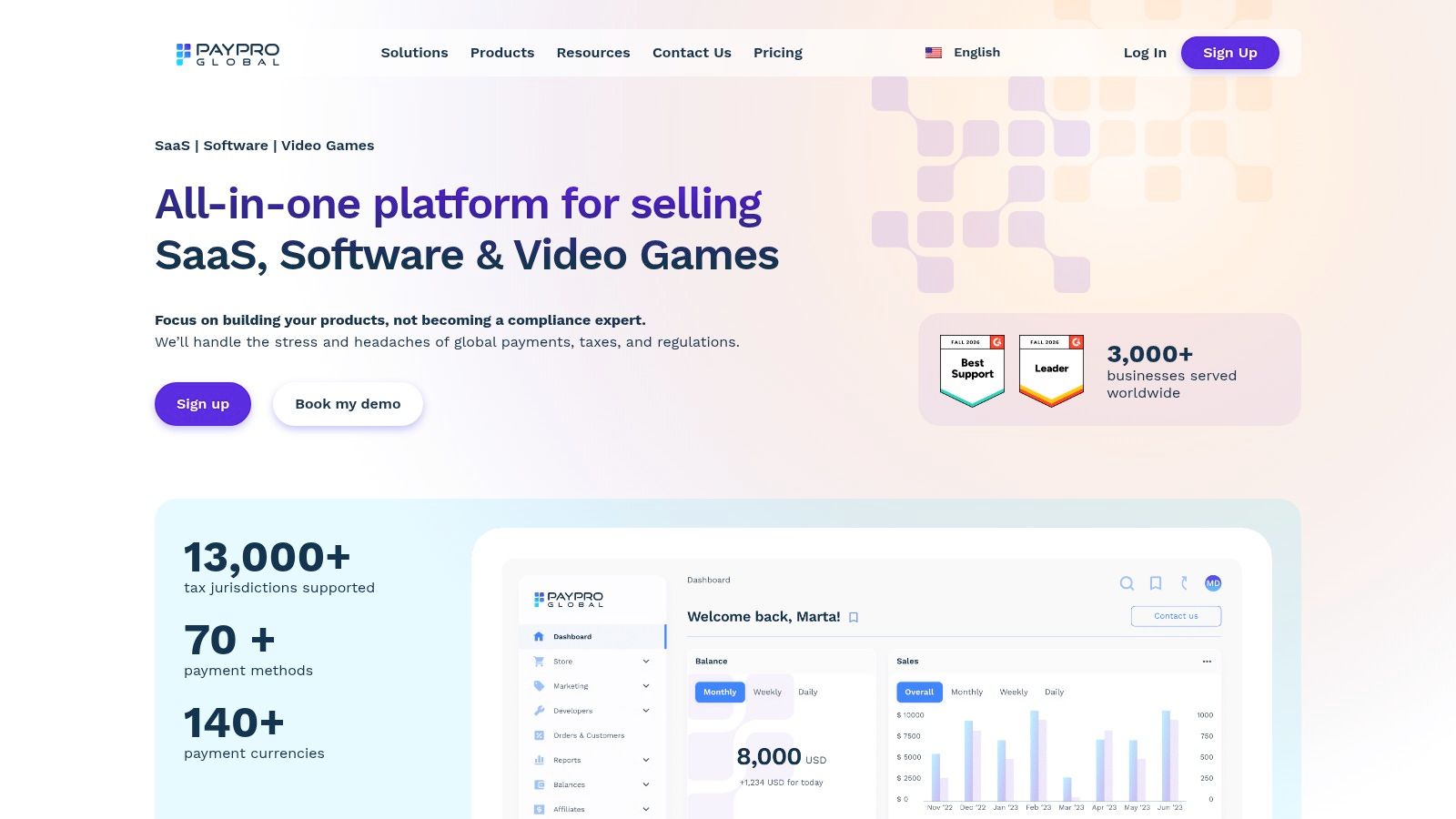
PayPro Global is another merchant of record option, but it leans harder into software vendors selling internationally. It acts as the legal seller in 200+ countries, taking on payment processing, tax, VAT, and regulatory compliance. That makes it relevant for founders who want broad international coverage without running a separate compliance project for each market PayPro Global.

What founders usually want from it
The appeal is simple. PayPro Global reduces the number of things a small SaaS team has to own directly. Global tax collection, remittance, and currency conversion are handled inside the platform, which is exactly the kind of burden many founders want to offload once they start selling beyond one home market. It also gives software companies commercialization and pricing tooling that's aimed at SaaS rather than generic digital goods.
The downside is the sales-led buying process. Pricing is not published online, and terms depend on your model and volume, so you need to verify the details before making a decision. That makes it more suitable for teams ready to talk through their billing requirements than for builders who want instant self-serve checkout setup. From a Chartsy perspective, PayPro Global is another case where you'll need to bring billing records in through the Custom API if you want revenue attribution and MRR reporting in one place.
6. Verifone and 2Checkout
2Checkout, now part of Verifone, is one of the older names in this space, and that matters if you want breadth and familiarity. It offers merchant of record and digital commerce solutions for SaaS and digital goods, with localized payment methods, multi-currency support, and recurring billing features 2Checkout.
Why some teams still use it
If you care about international reach and want a more established MoR footprint, 2Checkout stays on the shortlist. It's especially relevant for software vendors that need broad payment coverage and a platform that already understands digital commerce. The recurring billing tooling makes it relevant for SaaS too, not just one-time sales.
The trade-off is complexity. Pricing and tiering usually require sales verification, and the experience can feel more legacy than newer SaaS-first tools. That doesn't make it a bad fit, just a less polished one for teams that expect a modern billing UI. For founders comparing lemon squeezy alternatives, the key question is whether you want legacy reach or a cleaner product experience. If you choose 2Checkout, Chartsy won't read it natively, so you'd bring the data in through the Custom API if you want subscription analysis.
Practical rule: older MoR platforms can be perfectly workable if you're comfortable with sales-led onboarding and more manual setup.
7. Freemius
Freemius is one of the clearest SaaS-adjacent options for software licensing and subscriptions, especially for WordPress plugins, themes, desktop apps, and browser extensions. It handles checkout, licensing, upgrades, downgrades, global tax, and analytics as a merchant of record, which makes it a practical fit for small software shops that need both billing and product licensing in one place Freemius.

Best for plugin and theme businesses
If you sell WordPress software, Freemius solves a very specific problem well. It gives you licensing logic, upgrade paths, and software-friendly MoR handling without forcing you to build those parts yourself. For indie developers and small teams, that's a strong trade-off because it keeps the focus on shipping the product instead of building billing infrastructure.
Chartsy note: Chartsy supports Freemius natively, and the relevant workflow is documented in Freemius revenue attribution in Chartsy.
The limitation is that it's less suited to more complex non-WordPress SaaS billing, especially if you need advanced usage or seat-based billing like Paddle or Stripe Billing can handle. Its pricing model can also vary by product type, so the exact fee structure needs checking before you commit. For the right software business, though, it's a clean fit because it connects product licensing to recurring revenue without asking you to run a separate billing stack.
8. Gumroad
Gumroad is the simplest merchant of record option on this list. It's built for creators selling digital products, memberships, and simple subscriptions, and it handles tax and VAT at checkout so you can launch without much setup Gumroad.
When simplicity wins
For a solo SaaS founder testing a small digital offer, Gumroad can feel refreshingly direct. There's no monthly fee, so you're paying per sale instead of paying for idle software. That makes it easy to try an idea without committing to a heavy stack.
The downside is that Gumroad stays light on SaaS-grade billing features. It's better for simple recurring access than for seat-based plans, usage billing, or more detailed subscription reporting. It's also the sort of platform that can be outgrown once you need deeper analytics, tighter control over the customer lifecycle, or cleaner joins between acquisition and revenue data.
For founders comparing lemon squeezy alternatives, Gumroad is often the “launch fast, figure it out later” choice. That's fine for a small product test, but it usually stops being the right answer once MRR reporting becomes a weekly decision-making tool. If you need structured revenue attribution, Chartsy can work with more capable billing sources, but Gumroad is not one of the native connectors listed in the product overview, so you'd need to rely on the Custom API if you want that data inside Chartsy.
9. Payhip
Payhip is a hosted storefront for digital downloads, courses, and memberships. It's designed for quick setup, includes checkout and file delivery, and advertises automatic EU and UK VAT handling, plus some sales tax support, while typically connecting to the seller's Stripe or PayPal account for processing Payhip.
A practical middle ground
Payhip works best when you want something more structured than a creator storefront, but you don't need full SaaS billing depth. It's friendly for digital products and simple recurring products, and the free plan makes it accessible for teams that want to test demand before paying for a more serious stack. That combination has kept it popular among small teams and solo builders.
The trade-off is that it isn't a full merchant of record in the same way Paddle or FastSpring are. U.S. sales tax obligations may still fall on the seller, and the feature set is lighter for SaaS billing, especially if you need seats or usage-based logic. For a simple membership or digital download business, that may be enough. For a SaaS company trying to understand new revenue, expansion, contraction, and churn in one place, it often isn't.
10. SendOwl
SendOwl focuses on hosted checkout, secure file delivery, license key generation, and subscription tools with flat monthly pricing. Sellers connect their own Stripe or PayPal accounts, which keeps the billing relationship more directly under their control and avoids revenue-share pricing SendOwl.
Why it lands on this list
SendOwl is useful if you want predictable software costs and a straightforward checkout system for simple digital sales or recurring access. The flat-fee model can be attractive when you'd rather not pay a percentage of every sale. It also gives you enough structure for licenses, coupons, and membership products without dragging in a heavier billing stack.
The limit is that it's not an MoR, so tax and compliance remain your responsibility. It also has fewer SaaS-specific billing features than more complete subscription platforms. That makes it better for straightforward selling than for a SaaS team that needs deep churn analysis, revenue attribution, or detailed billing event reconciliation across plans and channels.
For Chartsy use, SendOwl is a reminder of the bigger issue with many lemon squeezy alternatives. A platform can handle checkout well and still leave you with fragmented reporting. If your revenue analysis matters more than the storefront itself, make sure the billing source can be normalized cleanly before you commit.
Top 10 Lemon Squeezy Alternatives, Quick Comparison
| Product | Core features ✨ | Target audience 👥 | Value & pricing 💰 | Ease & support ★ | Unique strength 🏆 |
|---|---|---|---|---|---|
| Paddle | ✨ MoR (tax/VAT), subscriptions (seat/usage), localized pricing | 👥 SaaS teams wanting MoR simplicity | 💰 MoR reduces compliance; revenue‑share model | ★★★★ | 🏆 SaaS‑first billing + migration tools |
| Stripe (Billing + Tax) | ✨ Subscriptions, metered billing, Stripe Tax, invoicing | 👥 Developer‑first SaaS & growth startups | 💰 Pay-as-you-go + add‑ons for Billing/Tax | ★★★★★ | 🏆 Developer control & vast ecosystem |
| Chargebee | ✨ Advanced catalog, dunning, invoicing, revenue recognition | 👥 Complex/enterprise SaaS & RevOps teams | 💰 Higher tiers; enterprise pricing | ★★★★ | 🏆 Powerful monetization & CPQ features |
| FastSpring | ✨ Full MoR, global payments, localized checkout | 👥 International SaaS wanting outsourced compliance | 💰 Custom/revenue‑share pricing (quote) | ★★★ | 🏆 Enterprise MoR footprint for global sales |
| PayPro Global | ✨ MoR in 200+ countries, tax collection & remittance | 👥 SaaS scaling into many countries | 💰 Quote‑based, volume‑dependent | ★★★ | 🏆 Broad legal & tax coverage worldwide |
| Verifone / 2Checkout | ✨ MoR, multi‑currency, subscription packages | 👥 Digital sellers needing established MoR | 💰 Tiered/custom pricing; regional fees possible | ★★★ | 🏆 Long‑standing global MoR offering |
| Freemius | ✨ MoR + licensing, trials, WordPress SDK, analytics | 👥 WordPress plugin/theme developers & indie devs | 💰 Developer‑friendly revenue share; varies by product | ★★★★ | 🏆 Purpose‑built for WordPress software sellers |
| Gumroad | ✨ MoR for creators, memberships, hosted storefront | 👥 Creators & small teams selling digital goods | 💰 No monthly fee; per‑sale fees can add up | ★★★★ | 🏆 Easiest launch path for creators |
| Payhip | ✨ Hosted storefront, subscriptions, EU/UK VAT handling | 👥 Creators selling courses, downloads, memberships | 💰 Transparent plans; connects Stripe/PayPal | ★★★★ | 🏆 Fast setup for digital sellers |
| SendOwl | ✨ Hosted checkout, file delivery, license keys, subscriptions | 👥 Sellers who prefer predictable monthly fees | 💰 Flat monthly pricing (no platform rev‑share) | ★★★★ | 🏆 Predictable cost model, simple licensing |
Choosing by Persona and Taking the Next Step
Solo founders selling SaaS should start with the question of how much tax and compliance work they want to hand off. If you want that burden reduced, merchant of record tools like Paddle, FastSpring, PayPro Global, 2Checkout, and Freemius are the cleanest fits, even though they give you less direct control over the transaction. If you want more control and are willing to own the compliance side, Stripe Billing plus Stripe Tax gives you a flexible processor-based stack.
For teams that care about reporting, the better question is where the billing data ends up. Chartsy connects natively to Stripe, Paddle Billing, Paddle Classic, and Freemius, with read-only connections for Stripe and Paddle, so those are the smoothest paths if you want to understand which marketing sources bring paying customers and how subscription revenue changes over time. If you use another provider, you can still bring in the billing events through the Custom API, but that means you send the data yourself. It's not an automatic connection.
Plugin and theme developers selling WordPress software have a clear fit in Freemius, because it combines licensing and MoR handling in a software-first package. Teams that need subscription depth and billing logic beyond a simple checkout should look at Chargebee. Creator-led businesses with simple products can still use Gumroad, Payhip, or SendOwl, but those tools usually stop short of the analytics depth a growing SaaS team needs.
The practical next step is simple. Pick the billing model first, then check whether your revenue data can be read back cleanly. If you want to see how that looks in practice, connect your billing source to Chartsy and ask the AI assistant, in plain English, which channels brought the customers behind your last MRR change. Treat the answer as the start of an investigation, not proof of causation. For teams trying to reduce spreadsheet work and understand revenue faster, that's the workflow that usually pays off. Learn more at Chartsy.
Chartsy helps SaaS founders connect traffic, signups, and billing data so they can see which channels bring paying customers and what drives MRR changes. If you're comparing lemon squeezy alternatives, it gives you a cleaner way to read Stripe, Paddle, Freemius, or custom billing data without living in spreadsheets. Visit Chartsy and see how plain-English analysis can turn billing events into clearer revenue decisions.

Written by
Chartsy TeamAnalytics team at Chartsy
The Chartsy Team writes guides, product updates, and resources to help SaaS and eCommerce founders make sense of their metrics, without SQL or spreadsheets.
Chartsy